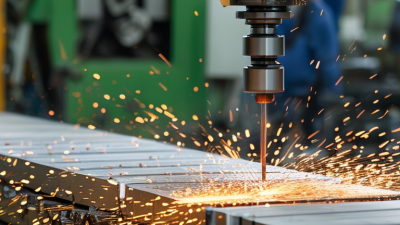
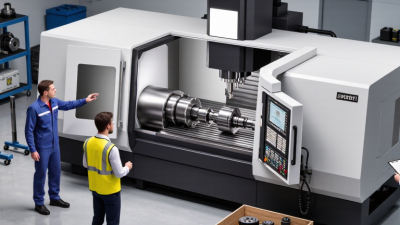
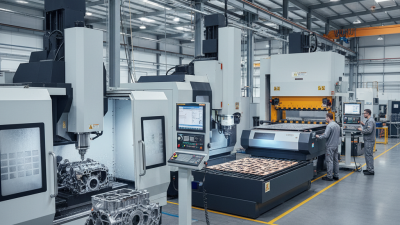
In 2026, choosing an Industrial Machine Tool is less about buying the biggest machine and more about matching its strengths to the job. A CNC machining center can mill several faces in one setup. A turning center handles rotational parts, while grinders refine surfaces where tolerances are tight. Presses and laser-cutting systems serve different production needs. The leading type depends on materials, batch size, accuracy, and available operators—not just purchase price.
Automation is reshaping these choices. The International Federation of Robotics reported 4,281,585 industrial robots in operation worldwide in 2023, with 541,302 new installations that year in its World Robotics 2024 report. Those figures describe robots, not machine-tool sales, but they show the scale of automation surrounding modern production lines. AMT’s manufacturing technology market reporting and Gardner Business Media’s World Machine Tool Survey offer additional industry context for tracking equipment demand. Still, a broad market trend cannot tell a factory which machine will pay off. That is where the comparison gets tricky.
This guide examines the main industrial machine tool types used in 2026, including machining centers, CNC lathes, grinders, presses, and cutting systems. It compares their typical applications, strengths, and practical limitations. A machine that excels on a large production run may be a poor fit for frequent, low-volume changeovers. And specifications alone rarely capture maintenance demands or operator skill. The ranking is not universal. Real production needs should lead the decision.
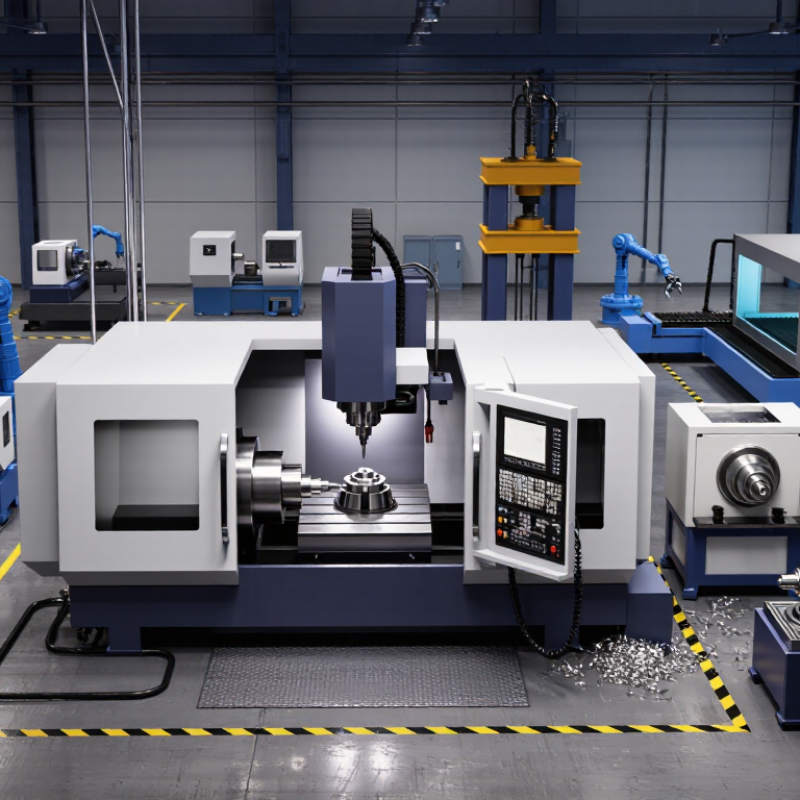
An industrial machine tool is a powered machine that shapes or finishes material by controlling the movement of a tool, a workpiece, or both. Common examples include lathes, milling machines, grinders, and drilling machines. Some remove material; others form it through pressure. The defining feature is controlled, repeatable work—not simply a large motor or heavy frame.
A CNC machine follows programmed instructions, while a manual machine relies more on an operator’s direct adjustments. Both need a rigid structure, accurate guides, and a way to hold the workpiece securely. Picture a metal block clamped to a milling table: if the table shifts under cutting force, the finished surface may show grooves or uneven edges. Small errors matter.
Classification alone does not tell you how well a tool suits a job. Spindle speed, work envelope, tool capacity, and achievable accuracy all affect what it can produce. Coolant may carry heat and chips away, but it cannot compensate for a loose fixture or worn guideway. In practice, setup and maintenance deserve as much attention as the machine’s headline specifications. That part is easy to overlook. I’d still check the actual part requirements before choosing a machine type.
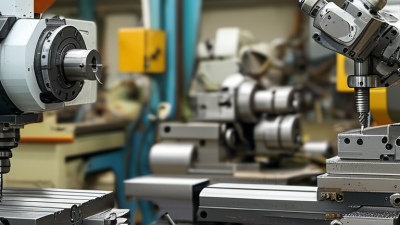
Industrial machine tools are best classified by the work they perform, rather than by appearance alone. Turning machines rotate a workpiece against a cutting tool. Milling machines use rotating cutters to shape parts. Drills create holes, while grinding machines use abrasive wheels for finishing and tight tolerances. The surface tells a story.
A second useful classification follows machine motion and capacity. A three-axis machining center moves along X, Y, and Z; added rotary axes can reach angled surfaces with fewer setups. Lathes may include live tooling for drilling or milling. Presses and gear-cutting machines handle distinct forming and shaping tasks. These labels describe function, not every operation.
Control systems offer another lens. Conventional machines rely more on operator adjustments, while CNC machines execute programmed movements and repeat settings. CNC is a control method, not a cutting process, so it can apply to lathes, mills, and grinders. Production volume matters too: a compact mill suits varied short runs, while dedicated equipment may support repetitive work. The boundaries are not perfect. One machine can fit several categories; tooling, axes, workpiece, and shop requirements all affect how it is classified.
| Classification | Machine Tool Type | How It Works | Common Operations | Typical Materials | Common Applications |
|---|---|---|---|---|---|
| Chip-forming | CNC turning machines and lathes | The workpiece rotates while a cutting tool removes material. CNC control coordinates tool movement and cutting parameters. | Facing, straight and contour turning, threading, grooving, and boring | Steel, aluminum, brass, titanium, and engineering plastics | Shafts, pins, bushings, threaded parts, and cylindrical components |
| Chip-forming | Milling machines and machining centers | A rotating multi-edge cutter removes material as the tool, workpiece, or both move along programmed axes. | Face milling, slotting, profiling, pocketing, drilling, and tapping | Cast iron, steel, aluminum, copper alloys, and plastics | Dies, molds, housings, brackets, plates, and complex prismatic parts |
| Chip-forming | Drilling and boring machines | A rotating cutting tool creates or enlarges holes; boring is commonly used to improve the size, alignment, or finish of an existing hole. | Drilling, reaming, counterboring, countersinking, and boring | Metals, wood, composites, and plastics | Fastener holes, engine components, pipework, and precision bores |
| Abrasive machining | Grinding machines | An abrasive wheel removes small amounts of material to achieve close dimensions or a refined surface finish. | Surface, cylindrical, centerless, and tool grinding | Hardened steel, carbide, ceramics, and selected superalloys | Precision shafts, cutting tools, bearing surfaces, and finished components |
| Chip-forming | Gear-cutting machines | Specialized cutters generate or finish tooth profiles on gears and other toothed components. | Hobbing, shaping, shaving, and gear grinding | Carbon and alloy steels, cast iron, and some nonferrous alloys | Gears for transmissions, industrial drives, pumps, and machinery |
| Nontraditional machining | Electrical discharge machining (EDM) | Controlled electrical discharges remove conductive material without direct cutting-tool contact. | Die-sinking, wire cutting, and small-hole EDM | Electrically conductive metals, including hardened tool steels and some superalloys | Dies, molds, intricate profiles, and fine features in hard conductive materials |
| Thermal and beam cutting | Laser and plasma cutting machines | A focused laser beam or ionized plasma jet cuts sheet or plate material; the processes differ in energy source and typical thickness range. | Sheet cutting, plate cutting, profiling, and piercing | Laser systems process many metals and nonmetals; plasma is primarily used for electrically conductive metals | Fabricated panels, enclosures, brackets, and structural parts |
| Nontraditional machining | Abrasive waterjet machines | A high-pressure water stream, often mixed with abrasive particles, erodes material along a programmed path. | Contour cutting, profiling, and trimming | Metals, stone, glass, ceramics, composites, and some plastics | Flat parts and materials where a narrow, non-thermal cutting process is useful |
| Forming and shaping | Presses and bending machines | Mechanical or hydraulic force deforms material using tooling, typically without removing chips. | Stamping, punching, blanking, bending, and forming | Sheet steel, stainless steel, aluminum, and other ductile metals | Sheet-metal panels, brackets, appliance parts, and formed components |
| Additive manufacturing | Industrial metal 3D printers | Components are built layer by layer from digital models, commonly by fusing metal powder or depositing material. | Powder-bed fusion and directed-energy deposition | Qualifiable metal powders or feedstocks, depending on the process and equipment | Complex parts, prototypes, low-volume production, and repair or material deposition |
| Classification note: Industrial machine tools are commonly grouped by their primary material-processing method, such as chip removal, abrasive machining, nontraditional machining, thermal cutting, forming, or additive manufacturing. A machine may support more than one operation, especially when it uses CNC control or combines multiple processes. | |||||
In 2026, milling and turning remain workhorses across automotive, aerospace, medical, and general manufacturing. CNC mills cut pockets, slots, and flat surfaces; lathes rotate stock to produce shafts, bushings, and threaded parts. Gardner Intelligence’s 2024 World Machine Tool Survey estimated global machine-tool consumption at about $88.9 billion in 2023, underscoring the scale of this equipment market. That figure covers machine tools broadly, not individual machine types.
Grinding machines handle finishing work where tight tolerances and smooth surfaces matter. Drilling and boring machines create or refine holes, while electrical-discharge machining cuts hard conductive materials with fine detail. Laser and waterjet systems are common for sheet and plate cutting, though they suit different materials and production needs. Still, fit matters.
Automation increasingly shapes how these tools operate. The International Federation of Robotics reported 541,302 industrial robots installed worldwide in 2023; robots often load and unload CNC machines. A small shop may rely on one versatile mill and lathe, while a high-volume plant may use dedicated cells. No single type wins everywhere. Tool selection still depends on material, tolerances, batch size, floor space, and operator skill—and those trade-offs are easy to underestimate.
Common machine tools serve different manufacturing needs. This chart compares the typical number of controlled axes in common CNC configurations—not market share or a ranking of popularity.
Typical configurations vary by model and application. A higher axis count can enable more complex movements, but does not alone indicate a machine’s capability or suitability.
Machine tools turn engineering drawings into repeatable parts, but each type serves a different production need. CNC mills cut faces, slots, and pockets in engine housings and medical-device components. Lathes shape rotating parts such as shafts and fittings. Grinders refine surfaces where tight tolerances matter. Presses form sheet metal for vehicle panels and appliance casings. Laser and waterjet cutters handle complex profiles with little contact force.
Across industries, the choice depends on material, geometry, volume, and required finish. Aerospace shops may mill lightweight components from solid blocks; job shops often rely on lathes for varied, smaller batches. In construction equipment, large boring machines help restore worn cylinders. These are practical distinctions, though real production lines often combine several processes. A faster spindle is not automatically a better process.
Market data reflects the sector’s scale. Grand View Research valued the global machine-tools market at $86.5 billion in 2023 and projected 6.1% annual growth through 2030. The International Federation of Robotics reported 541,302 industrial robot installations worldwide in 2023. Robots are not machine tools, but their use alongside machining can support loading, handling, and consistent production. That said, automation still depends on good tooling, setup, and operator judgment. It is easy to overlook the setup.
Choosing a machine tool starts with the part, not the catalog. Define the material, workpiece size, tolerance, surface finish, and expected batch volume. A five-axis mill can reduce setups for contoured parts; a CNC lathe may suit repeat shafts. More capability is not automatically more output. Extra axes can bring programming and maintenance demands. Run representative parts, not just showroom demonstrations.
Then compare cycle time, accuracy, tooling, operator training, service access, and total cost over the machine’s working life. The International Federation of Robotics reported 541,302 industrial robots installed worldwide in 2023, in its World Robotics 2024 report. That figure makes automation compatibility worth checking, but it does not mean every shop needs a robot-ready cell. The 2024 Deloitte and Manufacturing Institute study projected that 1.9 million U.S. manufacturing jobs could go unfilled by 2033. Ease of setup and training therefore matter alongside spindle power. Ask suppliers for sample cuts and realistic cycle-time estimates. I would still treat estimates cautiously: a perfect test part can hide awkward changeovers, chip buildup, or maintenance delays. Walk the machine’s footprint on the actual shop floor before committing.