Leave Your Message

10 Machine Tool Buying Tips for Global Buyers

Buying a Machine Tool across borders requires more than comparing prices on a supplier website. Global buyers must connect technical performance, delivery risk, service capability, and long-term operating costs. A machine may look impressive in photographs, yet its accuracy can depend on installation, temperature control, operator training, and maintenance discipline. Small details matter. A 0.01-millimeter tolerance can affect an entire production schedule.

This guide presents ten practical buying tips for international purchasing teams, production managers, and engineering leaders. It considers spindle speed, working capacity, control systems, energy use, tooling compatibility, inspection records, and spare-parts availability. Experienced buyers should request clear drawings, test-cut videos, factory references, and measurable acceptance criteria before signing a contract. Independent inspection can reveal alignment issues that brochures rarely mention. It also helps to evaluate communication quality, because delayed answers often become delayed support.

No checklist is flawless. A careful buyer may still underestimate local installation conditions or future software needs. That is why technical reviews should include operators, maintenance staff, and qualified engineers. Ask uncomfortable questions. Confirm every assumption in writing. Reliable suppliers welcome practical verification and explain limitations without hiding behind marketing language. With disciplined research and realistic expectations, global buyers can choose equipment that supports consistent output, safer work, and stronger return on investment. The cheapest offer is not always the most economical choice. Sometimes, it is simply the easiest number to approve.
10 Machine Tool Buying Tips for Global Buyers

Define Your Production Needs and Machine Requirements

Before requesting machine quotations, define the workpiece, not the machine. Record material, dimensions, tolerances, surface finish, and monthly volume. A steel shaft needing 0.01 mm accuracy demands different capability from an aluminum housing. Include drawings, inspection methods, and realistic production schedules. Vague requirements create expensive surprises.

The International Federation of Robotics reported 541,302 industrial robots were installed worldwide in 2023. This figure signals a broader shift toward connected, automated production. Your machine should therefore support future loading, probing, data collection, and safe integration. Do not pay for automation you cannot use. Yet, leaving no upgrade path can shorten the machine’s useful life.

Calculate the complete requirement. Compare spindle speed, torque, axis travel, tool capacity, cycle time, power demand, floor space, and operator skill. Ask whether local technicians can maintain the controls and critical components. The International Energy Agency notes that motors and industrial systems remain major electricity users, so energy consumption deserves a place in the specification. Small details matter.

A practical test is revealing. Run a representative part, measure the cycle, inspect the finish, and repeat it after thermal warm-up. One successful sample proves little. I once treated quoted accuracy as production accuracy; that assumption was too optimistic. Require documented test results, acceptance tolerances, training, and service response expectations before comparing prices.
Compare Machine Types, Features, and Technical Specifications

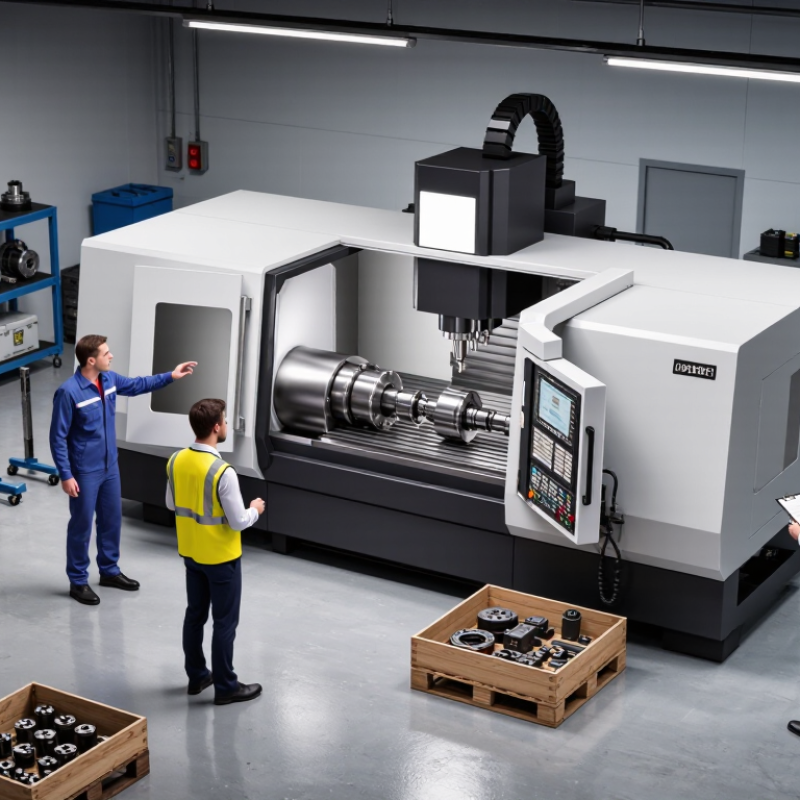
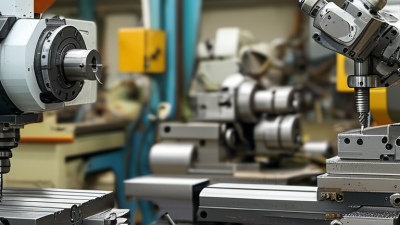
Global buyers should compare machine types before comparing prices. A CNC turning center suits rotational parts, while a machining center handles milled faces, pockets, and drilled patterns. For sheet work, a press brake or laser cutter may fit better. Review your drawings, material grades, batch sizes, and required tolerances. I have seen buyers choose a larger machine, then struggle with wasted floor space and low utilization. Bigger is not automatically better.

Tip 1: Match the machine to the workpiece.

Read technical specifications line by line. Check spindle speed, motor power, axis travel, positioning accuracy, repeatability, table load, tooling interface, and controller functions. A high spindle speed means little if torque drops during heavy cutting. Confirm whether stated accuracy reflects laboratory conditions or actual production temperatures. Ask for test-cut records, calibration documents, and sample inspection data. Small omissions become expensive later.

Tip 2: Compare the complete operating system.

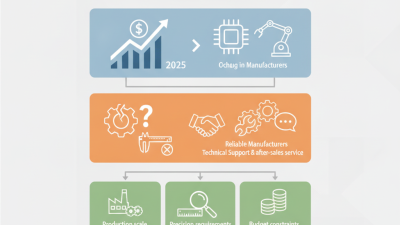
Evaluate chip removal, coolant capacity, guarding, access, maintenance points, and electrical requirements. Confirm voltage, frequency, compressed-air demand, installation limits, and training support before signing. Also check spare-parts availability and service response in your region. I sometimes trust brochures too easily; real performance depends on operators, tooling, materials, and maintenance discipline. Leave room for uncertainty. Tip 3: Request a practical acceptance test. Measure a representative part, not a perfect demonstration piece.

10 Machine Tool Buying Tips for Global Buyers

Compare machine types, key features, and technical specifications before requesting quotations.

The chart uses representative specifications commonly found in industrial machine-tool configurations. Actual values vary by machine size, application, material, tooling, and supplier.

Buying checklist: define the workpiece envelope, compare axis configuration, verify spindle speed and torque, check table or chuck capacity, evaluate positioning accuracy and repeatability, confirm control-system compatibility, review tool capacity and automation options, calculate power and utility requirements, verify installation and operator-training support, and compare total cost of ownership rather than purchase price alone.

Evaluate Supplier Reliability, Certifications, and Support

When buying a machine tool internationally, supplier reliability matters as much as cutting accuracy. I check how long the supplier has supported similar machines, not just how attractive the catalogue looks. Ask for verifiable customer references and recent production records. A factory should explain lead times clearly, including inspection, packing, and shipping stages. Vague answers often become expensive delays.

Tips: Request copies of quality certificates, safety declarations, and calibration records. Confirm that certificates match the exact factory, model, and current production site. Do not rely on a logo alone. Contact the issuing organization when practical. Also review the supplier’s technical drawings, test procedures, and acceptance criteria. Small details matter.

Support is easiest to judge before payment. Ask who will answer installation questions, how quickly parts can ship, and whether remote diagnosis is available. Request a sample service schedule with names, response times, and escalation steps. During one purchase, I focused heavily on specifications and underestimated training needs. That mistake slowed commissioning. A reliable supplier should provide manuals, operator training, spare-parts guidance, and realistic warranty terms. Still, no supplier is perfect. Leave room for documented risks, unexpected downtime, and clearer questions.

Calculate Total Ownership Costs and Financing Options

Buying a machine tool requires more than comparing purchase prices. Calculate total ownership costs over its expected working life. Include shipping, insurance, installation, tooling, software, training, energy, coolant, maintenance, and operator time. A machine costing less may consume more electricity or require expensive imported parts.

Tip: Request a five-year cost worksheet from each supplier. Add local taxes, customs charges, exchange-rate changes, and financing fees. Check the machine’s power requirements against your facility before ordering. A single-phase upgrade can delay production and increase installation costs. Ask for realistic service response times and spare-parts availability in your region.

Financing can protect cash flow, but interest changes the final price. Compare the annual percentage rate, deposit, payment schedule, currency, and early-repayment conditions. Match payments with expected production income, not optimistic sales forecasts. A fixed-rate agreement may provide stability, while a flexible option could reduce initial pressure. Review warranty coverage and maintenance contracts carefully, because exclusions can create unexpected costs.

I once underestimated training time. That error affected the first month’s output. A spreadsheet can still mislead when downtime is ignored. Estimate lost production during installation, testing, and operator learning. Ask experienced machinists to challenge your assumptions. Their practical feedback may reveal costs that financial models miss. Keep every quotation, calculation, and service promise in writing before signing.

Inspect, Test, and Finalize the Machine Purchase Agreement

For global buyers, a machine purchase should be treated as a measurable process, not a hopeful transaction.

Before visiting the supplier, prepare a checklist covering capacity, tolerances, materials, utilities, and safety functions. During inspection, photograph the nameplate, control cabinet, lubrication points, and included accessories. Ask to review maintenance records and calibration certificates. Small details matter. I once focused heavily on cutting speed and overlooked floor loading requirements. That mistake delayed installation and increased local costs.

A live test should use your material whenever possible. Test it live. Run a representative part, not only an easy demonstration piece. Measure critical dimensions with calibrated instruments, then record ambient temperature and machine settings. Check surface finish, repeatability, noise, vibration, chip removal, and tool-change performance. Let the operator complete the cycle without assistance. Watch for alarms, awkward access, or manual workarounds. Request written test results, including sample drawings, measurement data, and software versions. If a supplier refuses a realistic test, treat that refusal as useful information.

The purchase agreement must convert observations into enforceable specifications. State acceptance tolerances, inspection methods, delivery condition, installation scope, training hours, spare parts, warranty response times, and payment milestones. Define who pays for rework, replacement, travel, and additional testing when results fail. Include serial numbers and every promised accessory. Avoid vague phrases such as “high precision.” Use measurable values. Have technical and legal reviewers examine the translated contract. My agreements have improved after adding a signed acceptance form. Still, translation gaps can remain, so confirm each critical clause verbally and in writing before releasing the final payment.