2026 How to Choose the Best Hacksaw Blades for Your Projects?
When it comes to DIY projects, choosing the right hacksaw blades is crucial. According to John Smith, a respected expert in the cutting tools industry, "The quality of hacksaw blades can make or break your project." Selecting the right blade impacts efficiency and results significantly. Hacksaw blades come in various sizes, materials, and tooth configurations, each suited for different tasks.
Consider the type of material you will cut. For metal, high-speed steel blades work well. For plastics or wood, bi-metal blades offer versatility. However, not everyone considers the blade's teeth per inch (TPI). A blade with fewer teeth cuts faster but may leave a rough edge. A blade with more teeth offers a smoother finish but requires more effort.
Many users overlook blade maintenance. Dull blades often cause frustration and wasted materials. Regularly inspect your blades for wear and replace them as needed. Investing time in understanding hacksaw blades improves your project's success rate.
Understanding Hacksaw Blade Types and Materials
When it comes to hacksaw blades, understanding the types and materials is crucial for achieving optimal results in your projects.
Hacksaw blades come in various types, including bi-metal, high-carbon steel, and carbide-grit.
Bi-metal blades, composed of two types of steel, offer excellent durability and flexibility.
According to a study by the Industrial Research Institute, these blades can last up to 5 times longer than standard high-carbon steel blades.
High-carbon steel blades are economical and suitable for softer materials, but they wear out quickly.
Selecting the right material impacts cutting precision.
For instance, carbide-grit blades excel at cutting hard materials like ceramics.
Research indicates they can maintain cutting performance even after 400 cuts.
Ensure the blade's teeth per inch (TPI) aligns with the material's density.
A higher TPI is ideal for thinner materials, while a lower TPI works best for thicker ones.
Tips:
Always inspect the blade for wear.
A worn blade can produce inaccurate cuts.
Keep a variety of blade types in your toolbox.
This flexibility enables you to tackle diverse materials effectively.
Remember, not all projects require the same blade; being mindful of the specific needs can lead to more efficient work and fewer frustrations.
Factors to Consider for Blade Thickness and Tooth Count
When selecting hacksaw blades, the thickness and tooth count play crucial roles. Blade thickness affects both durability and cutting speed. Thicker blades typically resist bending and breakage. A report by the Industry Association for Metal Cutting indicates that a blade thickness of 0.025 inches is ideal for metal, offering a balance between strength and flexibility. However, this can vary based on the material being cut.
Tooth count influences the cut’s smoothness and speed. Fewer teeth per inch (TPI) allow for faster cuts, suitable for softer materials. For instance, a blade with 14 TPI is often recommended for cutting PVC or aluminum. Conversely, higher TPI blades provide cleaner cuts but may take longer. A study revealed that a TPI between 18 and 24 is optimal for cutting hardwoods without splintering. Users may find that this recommendation doesn’t always meet their needs, as project specifics play a significant role.
Choosing the right blade is not straightforward. Factors like blade wear and the cutting environment can alter performance. Sometimes, a higher TPI doesn’t yield better results due to material characteristics. Understanding these nuances requires practical experience. Observations from industry workshops highlight that novice users often overlook these factors, leading to poor selection choices. Engaging with skilled professionals can provide valuable insights into blade selection.
2026 Best Hacksaw Blades: Factors to Consider
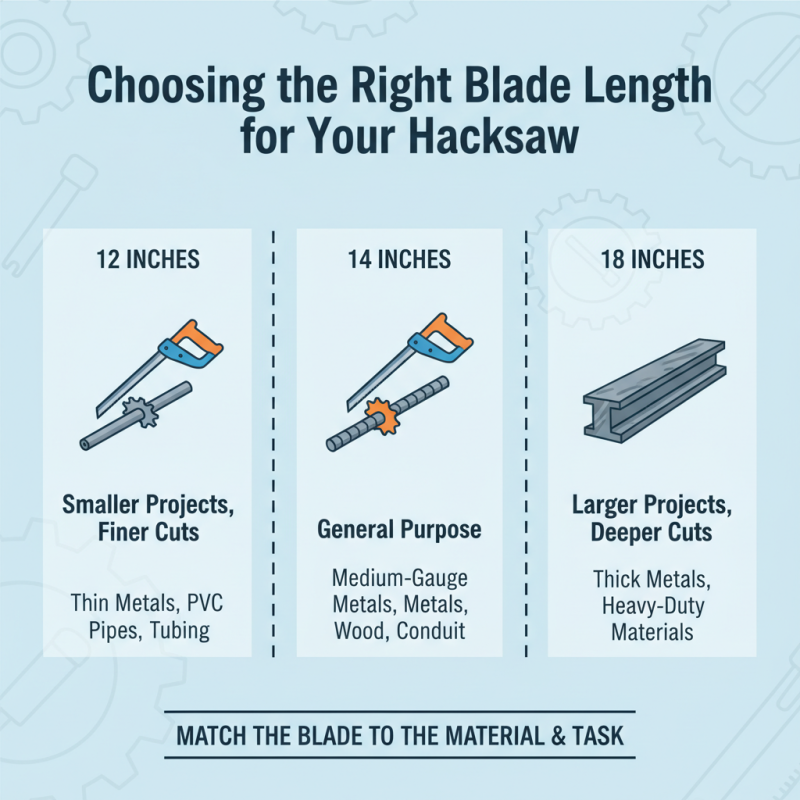
Choosing the Right Blade Length for Your Hacksaw
Choosing the right blade length for your hacksaw can significantly impact your project’s success. A hacksaw typically comes in various lengths. The most common blade lengths are 12, 14, and 18 inches. However, selecting a length is not just about availability. It's essential to match blade length with the material and cutting task.
Longer blades offer a greater reach, making them ideal for larger projects. They allow for deeper cuts, especially when working with thick materials. Conversely, shorter blades provide better control, especially in tight spaces. Think about your project’s requirements. Are you cutting metal pipes or delicate plastic? Each task demands a specific blade length.
Consider also the width of the workpiece. A blade that is too long can be challenging to maneuver. A too-short blade may not fit adequately. Adjusting to these needs takes experience. It’s a learning curve. Sometimes, you might find yourself using a blade length that feels inconvenient. Reflecting on these challenges will help shape better decisions in future projects.
Assessing Blade Durability and Cutting Efficiency
Choosing the right hacksaw blade is essential for project success.
Blade durability and cutting efficiency are two key factors. Understanding these elements can save time and improve results.
A durable blade will withstand the demands of frequent use.
It should resist wear and maintain performance over time. A good blade allows for smoother cuts, reducing the effort required.
Tips: Check for blade material. Bi-metal blades often offer better durability. The tooth count matters too;
fewer teeth mean faster cuts, but a rougher finish.
Cutting efficiency is crucial for productivity. A blade with the right tooth configuration can reduce friction.
This results in less heat buildup and longer blade life.
However, choosing the wrong blade can lead to frustration and wasted materials. Always consider the material you’ll be cutting.
Tips: For thick materials, use blades with more teeth. They provide finer finishes but require more power.
Experiment with different types to find what works best for you. Reflect on your past projects;
what went well, and what could have been better?
This insight can guide your choices.
Recommendations for Specific Projects and Materials
When choosing hacksaw blades for specific projects, consider the type of material you’re cutting. For metals, high-carbon steel blades work well for general tasks. Stainless steel or aluminum requires a finer tooth count, around 24 to 32 teeth per inch, to ensure a smooth cut. According to industry data, the right blade can increase efficiency by up to 30%.
If your project involves plastics, look for blades made from bi-metal or carbide-tipped materials. These are designed to handle tougher cuts more effectively without breaking down quickly. Blades with 14 to 18 teeth per inch can provide a good balance between speed and finish quality. However, using the wrong blade can lead to frustrating outcomes, making it essential to assess your material carefully.
**Tip:** Always check the material compatibility before choosing a blade. Not all blades are created equal.
Remember that your cutting technique also plays a crucial role. A steady hand and appropriate pressure can determine the success of your cuts. Rough handling can lead to blade wear and inaccurate cuts. Be mindful of these factors when executing your projects.
**Tip:** Keep spare blades on hand for unexpected needs. Having the right blade ready can save you time when you switch materials.
How to Choose the Best Hacksaw Blades for Your Projects?
| Project Type |
Material |
Blade Type |
Teeth Per Inch (TPI) |
Recommended Use |
| Piping Installation |
PVC |
Bi-Metal |
18 TPI |
For clean cuts without cracking |
| Metal Fabrication |
Steel |
High-Speed Steel |
14 TPI |
Efficient for thicker cuts and metal shapes |
| Woodworking |
Hardwood |
Carbon Steel |
10 TPI |
Ideal for quick cuts and finishing edges |
| Surface Preparation |
Aluminum |
Bi-Metal |
32 TPI |
For clean, burr-free cuts |
| Plumbing Repairs |
Copper |
Carbon Steel |
24 TPI |
Great for precise cuts and joint work |