Top Saw Tools for 2026 What Global Buyers Need to Know
As we approach 2026, the saw tools market is poised for significant transformation. Industry reports indicate that the global saw tools market is expected to reach $12 billion by 2026, driven by advancements in technology and rising construction activities (Source: Global Industry Analysts). This growth highlights the importance for buyers to stay informed about the latest developments in saw tools.
Recent innovations in materials and designs have made saw tools more efficient and durable. For example, carbide-tipped blades are becoming popular due to their extended lifespan and cutting precision. However, despite these advancements, challenges remain. Not all professionals are aware of the best options available. Misunderstanding specifications leads to poor purchasing decisions.
Moreover, sustainability is becoming a key consideration. Manufacturers are now focused on creating eco-friendly saw tools. Yet, the price point for such products may deter some buyers. An educated choice is essential in this evolving landscape. Understanding the nuances of saw tools will empower buyers to make informed decisions that enhance their productivity and outcomes. Stay engaged and informed as we delve deeper into the essential saw tools of 2026.

Emerging Trends in Saw Tool Technology for 2026
As we approach 2026, the saw tool industry is poised for significant advancements. Industry reports indicate a growing demand for precision cutting tools, with global sales projected to exceed $12 billion. This surge is driven by innovations in materials and technology that enhance blade durability and reduce wear.
Emerging trends point towards the integration of smart technology in saw tools. These tools are becoming increasingly equipped with sensors that monitor performance and adjust settings in real-time. For example, a recent study highlighted that tools with IoT capabilities can improve efficiency by 20%. This shift towards automation aims to alleviate user fatigue and enhance safety.
However, not all advancements come without challenges. Manufacturers face issues related to the cost of new technology. There is also an ongoing debate about the sustainability of materials used in saw production. Balancing performance with environmental impact remains a pressing task. Moreover, the industry must ensure that users are properly trained to maximize these new features. Crafting tools that are both effective and user-friendly is a continual work in progress for engineers.
Top Saw Tools for 2026
Key Features to Look for in Modern Saw Tools
When searching for modern saw tools in 2026, buyers should pay attention to several key features. Ergonomics is critical. A comfortable grip can make all the difference during long hours of work. Lightweight materials will reduce fatigue, leading to better precision. Look for tools that balance strength with ease of use.
Blade technology is another area to explore. High-quality blades can significantly enhance performance. Advanced materials like carbide or diamond-infused composites offer durability and sharper cuts. Ensure blades can be easily replaced. Quick-change mechanisms save valuable time on the job, making projects more efficient.
Noise pollution and vibration control are often overlooked. A tool that minimizes vibrations protects the user’s hands and improves control. Moreover, tools designed with noise reduction features contribute to a safer working environment. Investing in these attributes not only enhances the work experience but also promotes safety.
Comparative Analysis of Global Brands in the Saw Tool Market
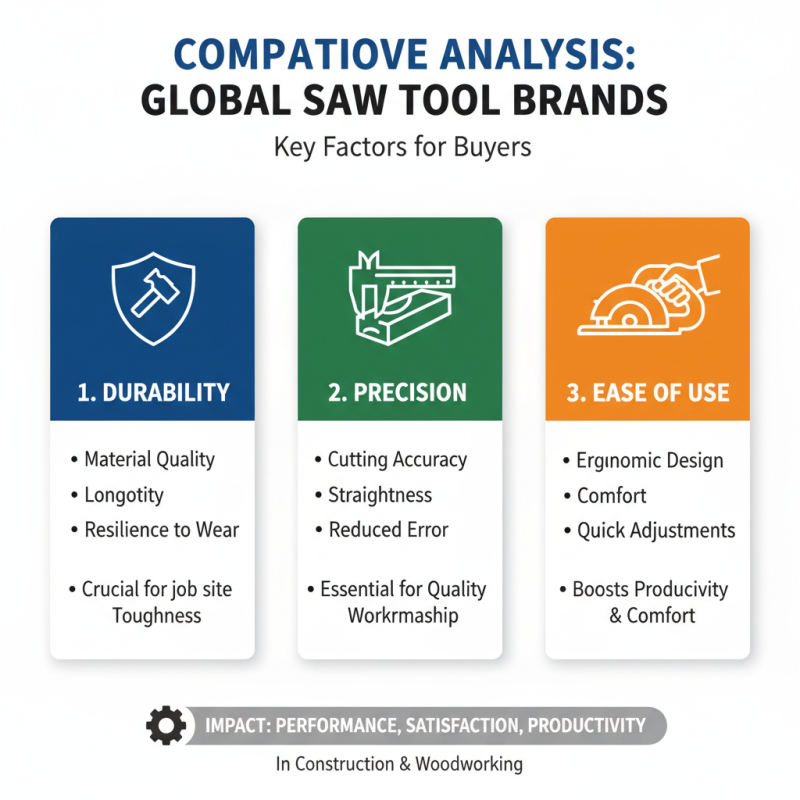
In the saw tool market, global buyers face numerous options. Conducting a comparative analysis reveals distinct characteristics among leading brands. Buyers should focus on the tools' durability, precision, and ease of use. These factors significantly impact performance, influencing overall satisfaction and productivity in construction and woodworking.
When examining materials, it's essential to note variances in blade compositions and coating technologies. Some brands promote advanced features, while others emphasize simplicity. This disparity can confuse buyers. It’s crucial for potential users to evaluate their specific needs carefully. Often, the most advanced tools may not align with all projects.
Moreover, customer support is vital in the purchasing journey. Reliable after-sales service can enhance user experience. However, inconsistencies in warranty offerings and customer feedback can signal potential issues. Engaging with various user communities can provide valuable insights, helping buyers navigate their choices.
Best Practices for Selecting Saw Tools for Various Applications
Choosing the right saw tools can significantly impact your project outcomes. Before making a selection, consider the specific applications you will tackle. For instance, woodworking requires different tools than metal cutting. Assess the materials you plan to work with and choose saws designed for them. This ensures better performance and longevity.
Analyzing the saw's specifications is crucial. Pay attention to blade types, teeth count, and cutting speeds. These features determine how effectively a saw will operate. However, even with the right specs, users often overlook maintenance. Regular upkeep extends the life of the tools and improves efficiency. Neglect can lead to costly mistakes.
It's also important to consult industry experts or reliable guides. Experience is key in spotting quality tools that meet your needs. Feedback from seasoned professionals can provide insights that specifications alone cannot. Finding the balance between price and quality takes time and reflection. Ultimately, the right saw can enhance productivity and accuracy in your work.
Sustainability and Innovations in Saw Tool Manufacturing
As the saw tool industry evolves, sustainability becomes a focal point for manufacturers. In 2026, buyers will notice a shift towards eco-friendly materials. Reports indicate that 30% of industry leaders are investing in renewable resources. This trend not only reflects consumer demand but also regulatory pressure to reduce carbon footprints.
Innovations in manufacturing techniques are also on the rise. Many companies are adopting advanced technologies such as 3D printing and automation. These methods minimize waste, often reducing production time by up to 25%. However, the transition to these technologies isn’t flawless. Some manufacturers struggle to balance cost with quality. It raises questions about long-term viability in a competitive market.
To meet evolving consumer preferences, saw tool producers are exploring closed-loop systems. By reusing materials, they can lower costs and environmental impact significantly. Yet, these systems require substantial initial investment and operational adjustments. The journey toward sustainability is complex, with potential setbacks along the way. Continuous feedback and adaptation will be essential for success.