China Top 10 Hacksaw Tools for Efficient Cutting Solutions?
In the realm of cutting tools, hacksaw tools hold a vital position. As industries evolve, efficient cutting solutions are in high demand. According to a recent market report by Grand View Research, the global hacksaw blade market is expected to reach USD 1.5 billion by 2025. This highlights the essential role of quality hacksaw tools in manufacturing and construction sectors.
However, not all hacksaw tools deliver the same performance. Users often face challenges with durability and precision. The right choice can significantly impact productivity and safety. A survey from the Tool and Manufacturing Association reveals that over 40% of professionals find inefficiencies in their cutting processes. This statistic underscores the importance of selecting high-quality tools.
Exploring the top hacksaw tools available in China provides valuable insights. Manufacturers are emphasizing advanced materials and ergonomic designs. Yet, issues such as inconsistent quality persist. It is crucial to assess user reviews and expert recommendations when investing in these tools. Ultimately, choosing the best hacksaw tools can lead to enhanced operational efficiency and workplace safety.

Top 10 Hacksaw Tools in China for Precision Cutting Efficiency
When discussing hacksaw tools in China, precision is key. These tools are essential for various industries, including construction and manufacturing. According to a 2023 market report, the global hacksaw blade market is projected to grow significantly. Precision cutting tools are in high demand due to advancements in technology and the need for efficient production processes.
The top hacksaw tools on the market offer features that enhance cutting efficiency. For instance, many tools come with adjustable tension mechanisms. This ensures consistent blade performance. However, some users report difficulties in maintaining the right tension over time. This can lead to suboptimal cutting, impacting productivity.
Moreover, the design of the hacksaw handle plays a crucial role in user comfort. ergonomic handles can reduce hand fatigue during prolonged use. That being said, a lack of standardization in design means not all tools meet user needs. Some users may find certain designs uncomfortable after extended use. Balancing precision and comfort remains a challenge in the industry. With ongoing innovation, the pursuit of the perfect hacksaw tool for precision cutting continues.
China Top 10 Hacksaw Tools for Efficient Cutting Solutions
| Tool Model |
Material |
Cutting Capacity (mm) |
Weight (kg) |
Price Range (CNY) |
| Model A |
High Carbon Steel |
300 |
1.2 |
50 - 80 |
| Model B |
Bimetal |
400 |
1.5 |
70 - 100 |
| Model C |
Alloy Steel |
350 |
1.1 |
40 - 70 |
| Model D |
Special Steel |
450 |
1.3 |
60 - 90 |
| Model E |
Tool Steel |
500 |
1.4 |
80 - 110 |
| Model F |
HSS |
400 |
1.6 |
90 - 120 |
| Model G |
Carbon Steel |
350 |
1.0 |
30 - 50 |
| Model H |
Bimetal |
400 |
1.5 |
70 - 95 |
| Model I |
Alloy Steel |
380 |
1.2 |
60 - 85 |
| Model J |
Tool Steel |
450 |
1.3 |
80 - 110 |
Overview of Hacksaw Tool Types and Their Applications in Industry
Hacksaw tools are essential in various industries, providing efficient cutting solutions. Different types of hacksaws serve unique purposes. The most common are manual, power, and portable hacksaws. Manual hacksaws are often preferred for precision cutting in tight spaces. They are lightweight and easy to handle. Power hacksaws, on the other hand, are suited for heavy-duty applications, offering speed and efficiency. A study by the Industrial Cutting Association highlights that power hacksaws can reduce cutting time by up to 50% compared to manual versions.
The choice of hacksaw impacts the overall effectiveness in various sectors, such as construction and manufacturing. Each type also caters to materials like metal, wood, or plastic. According to a recent market analysis, demand for hacksaw tools in the industrial sector has grown by 15% annually. This surge is attributed to advancements in manufacturing technologies and a push towards automation. However, the reliance on power tools raises concerns about maintenance and safety protocols. Proper training is crucial for operators to prevent accidents and ensure longevity of the tools.
Furthermore, the industry is witnessing innovations, including adjustable hacksaws that improve versatility. Yet, the balance between innovation and user-friendly designs often remains a challenge. Manufacturers should focus on simplifying tool operation without compromising performance. User feedback indicates a desire for more ergonomic designs that minimize fatigue during prolonged use. Addressing these issues is vital to enhance productivity and ensure operator safety across different trades.
Key Materials Used in Hacksaw Blade Manufacturing: A Comparative Analysis
When discussing hacksaw blade materials, several key options emerge. Common materials include high-carbon steel, bi-metal, and carbide-tipped blades. Each offers distinct advantages and limitations. High-carbon steel is affordable and easy to sharpen, which is appealing for DIY projects. However, it lacks durability for tougher tasks.
Bi-metal blades provide a perfect balance between flexibility and toughness. They combine high-speed steel teeth with a flexible backing, making them suitable for various materials. Yet, these blades can be pricier and may not be necessary for all users. A trade-off exists between cost and performance.
Carbide-tipped blades excel in cutting harder materials like stainless steel. While they outperform others, the maintenance can be tricky. Users must be diligent about proper care to prevent damage. Reflecting on these materials helps users choose the right blade for their needs. Efficiency is vital, but the wrong choice can lead to frustration. Understanding these materials is crucial for effective cutting solutions.
Market Trends: The Growth of Hacksaw Tools in China's Manufacturing Sector
The hacksaw tool market in China is seeing remarkable growth. This trend stems from the booming manufacturing sector, where efficiency is paramount. Manufacturers now seek tools that offer precision and reliability. Hacksaws are becoming essential for cutting metal and other hard materials. Innovations in design and blade technology enhance cutting performance.
Manufacturers must choose the right hacksaw tools. Not all options meet the demands of various materials. Discrepancies in quality can lead to inefficient cutting processes. Some users report that certain tools wear out quickly. Analyzing these issues can improve selection strategies.
Additionally, market competition affects pricing. Affordable items may sacrifice quality. It's crucial to balance cost with performance. This market's rapid evolution presents opportunities and challenges. Keeping pace with technological advances is necessary for manufacturers aiming for success. Understanding these dynamics ensures better decision-making in tool selection.
Performance Metrics: Evaluating Cuts per Minute and Blade Longevity
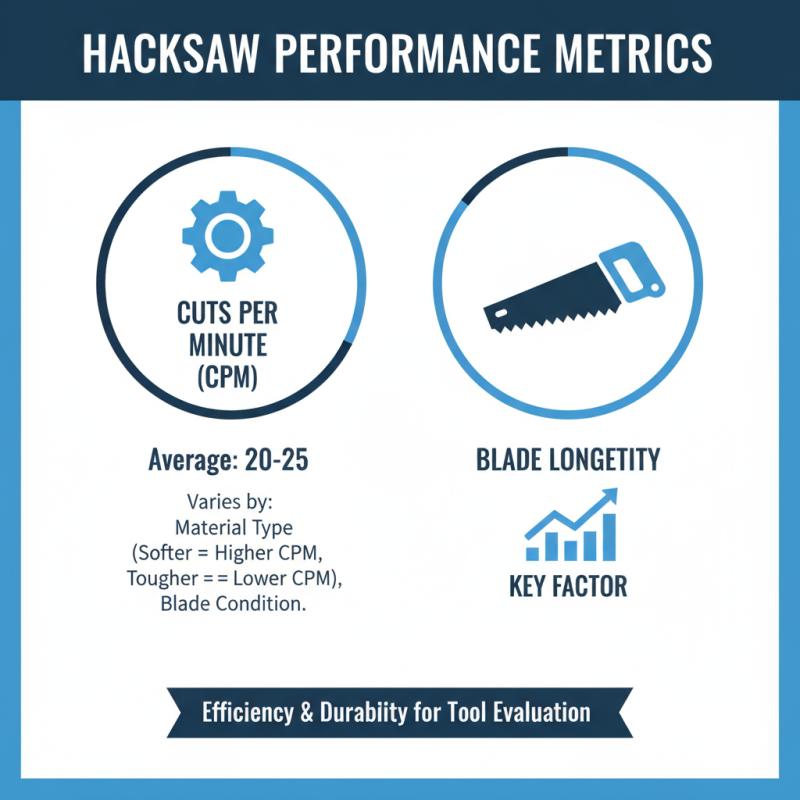
When evaluating hacksaw tools, cutting efficiency is significant. Performance metrics like cuts per minute (CPM) and blade longevity play a critical role. According to industry reports, the average CPM for high-quality hacksaws is approximately 20-25. This metric can vary based on material type and blade condition. For instance, softer metals yield higher CPM while tougher materials decrease the rate.
Blade longevity is another important consideration. Data suggests that a well-maintained blade can last between 300 to 600 cuts, depending on the material and proper usage techniques. Regular inspection can significantly improve performance. Occasionally, cutting at incorrect angles can lead to premature wear.
Tips: Always clean the blade after use. Debris can affect cuts per minute. Consider varying your cutting speed based on material density. Adjusting your technique can extend blade life. Experiment with different angles to find the most efficient cutting method for your projects. Using the right lubrication will also enhance productivity.