Leave Your Message

Why Choose Professional Saw Tools for Global Buyers?

Global buyers rarely choose Saw Tools by price alone. They examine cutting accuracy, service life, operator safety, and supplier consistency. A professional saw must perform across different materials, workshops, climates, and production schedules. That standard is difficult to judge from a product photograph.

Paul Sellers, a respected professional woodworker and hand-tool educator, has said, “A saw is only as good as the person using it.” His observation remains relevant for industrial buyers. Even a premium blade can underperform when tooth geometry, feed pressure, machine alignment, or maintenance is ignored. Experienced suppliers therefore explain these details clearly. They discuss high-carbon steel, carbide grades, kerf width, tooth pitch, vibration control, and sharpening support. The evidence should be practical: test-cut records, material recommendations, inspection data, and responsive technical assistance.

Small details matter.

A reliable manufacturer also shows how its Saw Tools are produced. Buyers should look for controlled heat treatment, consistent tooth setting, batch traceability, and realistic performance claims. Independent testing or recognized quality systems can strengthen confidence, but certificates cannot replace field experience. This is where many purchasing decisions become imperfect. A tool may meet specifications yet feel unsuitable on a real production line. Conversely, a less familiar model may deliver cleaner cuts and lower waste after proper setup. Professional selection requires trial feedback, honest comparison, and a willingness to revise assumptions. For global buyers, the strongest supplier is not merely the cheapest source. It is the partner that combines engineering knowledge, dependable communication, and measurable results over time.
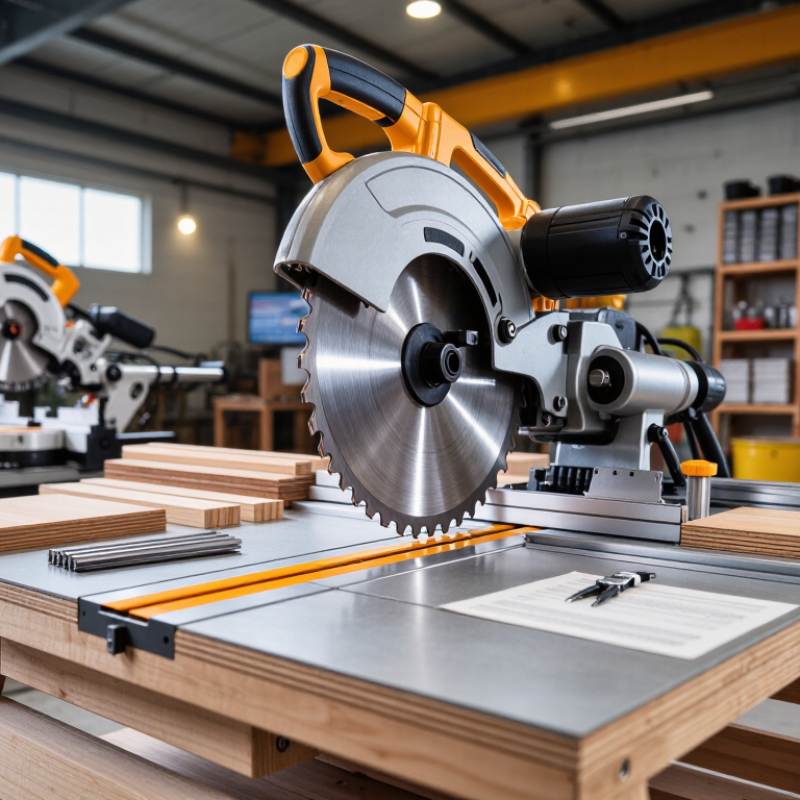
Why Choose Professional Saw Tools for Global Buyers?

What Defines Professional Saw Tools for Global Buyers

Professional saw tools are defined by measurable performance, not appearance.

Global buyers usually examine cutting accuracy, motor stability, blade compatibility, and service life. A professional model should maintain steady torque through dense timber or metal. It should also control vibration during long shifts.

According to Grand View Research’s 2024 power tools report, the global market reached about 46.5 billion US dollars in 2023.

That growth increases choice, but it also increases confusion. Buyers should check tested specifications, not broad advertising claims. ISO 12100 supports a risk-assessment approach for machinery design, while IEC 62841 covers safety requirements for many portable motor-operated tools. These references help purchasers compare protection systems, guards, switches, and electrical safety.

Small details matter. A poorly designed dust outlet can quickly affect visibility and breathing comfort.

Professional tools also need practical global support. Voltage range, plug configuration, spare blades, repair access, and clear manuals can determine real productivity.

The U.S. Bureau of Labor Statistics recorded 5,283 fatal occupational injuries in 2023.

This figure is not saw-specific, but it shows why procurement cannot treat safety as decoration. Buyers should request test records and maintenance guidance. They should question unclear claims.

A higher price does not automatically prove professional quality. In some cases, even experienced purchasers overlook noise levels and replacement-part availability. That is worth reconsidering.

Key Performance Advantages in Industrial Cutting Applications

Professional saw tools matter because industrial cutting demands more than a sharp blade. Consistent tooth geometry helps produce clean edges across steel tubes, aluminum profiles, and engineered panels. A stable blade body reduces vibration during long production runs. This protects cut accuracy and lowers operator fatigue. It also supports safer, more predictable machine performance.

Heat control is another important advantage. Proper tooth design and suitable cutting speed can reduce friction at the workpiece. Lower heat helps limit discoloration, warping, and premature tooth wear. In practical factory use, this can mean fewer blade changes and less material waste. However, performance depends on setup. Incorrect feed pressure can damage even a high-quality saw tool.

Professional tools also offer stronger process reliability. Buyers should review cutting data, compatible materials, maintenance needs, and local safety requirements. Traceable quality checks, balanced construction, and clear technical documentation support confident purchasing across different markets. Small details matter. A poorly aligned arbor can create rough cuts and dangerous vibration.

No tool fits every job. Global buyers should compare service life, cut quality, operating cost, and application evidence rather than choosing by price alone. Field trials remain valuable because workshop conditions rarely match laboratory testing. Some published performance claims may appear impressive, but they need independent verification. A careful trial with real material can reveal the better choice.

Why Choose Professional Saw Tools for Global Buyers?

Typical industrial band-saw cutting speeds by workpiece material. Higher cutting speed can improve throughput when the blade type, tooth geometry, coolant, and machine settings are correctly matched.

Values represent practical midpoint estimates from commonly used industrial cutting-speed ranges; actual settings depend on material grade, section size, blade specification, and machine condition.

How to Evaluate Quality, Safety, and Durability

Why Choose Professional Saw Tools for Global Buyers?

How to Evaluate Quality, Safety, and Durability

Global buyers need more than a sharp blade and attractive packaging. A professional saw should cut smoothly, resist vibration, and maintain control during repeated use. Check the handle fit, trigger response, blade alignment, and guard movement before judging performance. Hold it firmly. The grip should feel stable, even with work gloves. Uneven teeth, loose screws, or rough casting often reveal weak manufacturing control.

Safety requires practical inspection, not simple claims. Ask for test records, material information, operating instructions, and compliance documents suited to the destination market. Confirm that protective features work without excessive force. For powered models, examine cable protection, switch reliability, heat management, and emergency stopping functions. A tool that feels powerful but overheats after several minutes may create serious operational concerns.

Durability is easier to assess through evidence. Request production samples and test them on realistic materials, not only soft demonstration boards. Measure cutting speed, vibration, noise, and wear after repeated cycles. Professional suppliers should explain inspection points and respond clearly when problems appear. I once trusted a clean sample too quickly; later, inconsistent fastening exposed a quality gap. That mistake still matters. No inspection is perfect, so buyers should combine hands-on testing, independent verification, and supplier history before placing large orders.

Why Choose Professional Saw Tools for Global Buyers? - How to Evaluate Quality, Safety, and Durability

Evaluation Dimension Recommended Data or Benchmark Why It Matters to Global Buyers Verification Method
Applicable Safety Standards For chain saws, check conformity with ISO 11681-1 or the applicable regional equivalent. For woodworking machinery, verify relevant EN 1870 or EN 62841 requirements according to the tool type. Recognized standards provide a consistent baseline for guards, controls, mechanical construction, and user protection across international markets. Request the standard number, declaration of conformity, technical file summary, and independent laboratory test reports where required.
Blade or Chain Material Professional blades commonly use hardened or high-speed steel, carbide-tipped teeth, or other application-specific tool steels. The material should match the cutting target and operating speed. Suitable tooth material improves edge retention, cutting consistency, heat resistance, and resistance to tooth breakage. Review material certificates, tooth-hardness data, metallurgical reports, and cutting tests using the intended workpiece.
Dimensional Accuracy Check blade diameter, kerf, bore or mounting pattern, chain pitch, gauge, tooth geometry, and permissible runout against the equipment specification. Correct dimensions reduce vibration, prevent improper installation, and help maintain accurate cutting performance. Use calibrated gauges, optical inspection, runout measurement, and incoming-quality sampling based on a documented tolerance plan.
Vibration Performance For hand-held power saws, vibration values should be reported in m/s² using the applicable test method, such as ISO 5349-related measurement practices or the relevant tool standard. Lower vibration can improve handling, cutting control, and operator comfort. Exposure assessment remains necessary because permitted use depends on the measured value and operating time. Request a laboratory vibration report and compare the declared value with local occupational-exposure requirements and the intended duty cycle.
Noise and Operator Protection Noise emissions should be declared in dB(A) using the applicable measurement standard, such as ISO 22868 for chain saws where applicable. Noise data supports workplace risk assessments, personal protective equipment selection, and compliance with local regulations. Check the measured sound-pressure or sound-power data, test conditions, operating mode, and required hearing-protection guidance.
Guarding and Safety Controls Confirm functional guards, trigger or switch protection, chain brake or kickback protection where applicable, blade-retaining components, and an accessible emergency-stop function for stationary equipment. Effective controls reduce risks from accidental start-up, kickback, flying particles, contact with moving parts, and blade failure. Perform functional tests, visual inspections, misuse-resistant control checks, and safety-distance verification before shipment.
Thermal and Load Durability A professional tool should complete repeated cutting cycles at its rated load without abnormal overheating, motor stall, tooth loss, excessive smoke, or permanent deformation. Load testing reveals weaknesses that may not appear during short demonstrations and helps estimate suitability for continuous or repeated professional use. Use a documented endurance protocol covering rated material, duty cycle, cooling intervals, temperature monitoring, and post-test inspection.
Corrosion and Environmental Resistance Specify the required corrosion protection for the operating environment, including coated or treated steel, protected fasteners, sealed bearings, and suitable storage protection. International shipments may encounter humidity, condensation, salt air, temperature changes, and long storage periods. Review coating specifications, packaging protection, salt-spray or humidity-test data where relevant, and inspect samples after storage simulation.
Maintenance and Replaceable Parts Confirm availability of replacement blades, chains, guards, drive components, filters, fasteners, and service instructions for the expected support period. Repairable products generally reduce downtime, lifecycle cost, and disposal volume compared with tools that require complete replacement. Request a parts list, exploded drawing, maintenance schedule, lead times, and documented service procedures.
Packaging and International Transport Packaging should immobilize the blade or chain, protect cutting edges, prevent moisture ingress, and withstand normal stacking and handling during transport. Proper packaging reduces concealed damage, corrosion, injury during unpacking, and claims caused by international logistics. Conduct drop, vibration, moisture, and unpacking inspections based on the selected transport mode and packaging specification.
Traceability and Quality Control Each production batch should be traceable through lot numbers, inspection records, raw-material documentation, and final functional-test results. Traceability supports root-cause analysis, consistent quality, targeted recalls, and reliable after-sales management. Audit the quality-management process and verify that sample labels can be linked to inspection and production records.
Documentation for Market Entry Prepare operating instructions, warnings, maintenance information, technical specifications, conformity documents, and translated safety content for the destination market. Complete documentation supports legal compliance, safe operation, customs clearance, training, and customer confidence. Review the documents against destination-country requirements before purchase approval and confirm that ratings match the physical product.

Note: Applicable standards, test methods, tolerances, and legal requirements vary according to the saw type, power source, cutting application, and destination market.

Choosing the Right Saw Tool for Different Materials

Why Choose Professional Saw Tools for Global Buyers?

Choosing the Right Saw Tool for Different Materials

A professional saw tool should match the material, not merely the cutting speed. In daily workshop use, wood, steel, masonry, and composites respond differently under pressure. Softwood needs a blade that clears chips quickly and leaves a clean edge. Hardwood benefits from sharper teeth and controlled feed pressure. Pushing too hard can scorch the cut and shorten blade life. The right match feels steady in the hand. That matters.

For steel, choose a blade designed for metal cutting, with suitable tooth geometry and heat resistance. Thin sheet metal usually needs finer teeth to reduce vibration and grabbing. Thick sections may require a coarser pattern and slower, consistent movement.

Masonry creates abrasive dust, so a durable diamond cutting edge and effective dust control are important. Concrete is unforgiving. Always check the tool’s rated material, diameter, speed, and mounting system before use. These details are easy to overlook when purchasing across borders.

Global buyers should also examine documentation, replacement availability, and tested safety features. Clear instructions help operators use the correct guard, protective equipment, and operating speed.

A professional tool is not automatically the best choice. It must suit the machine, workload, and local working conditions. I have seen efficient blades perform poorly when the arbor size was wrong or the material was damp. That experience is worth remembering.

There is no perfect blade. Careful selection, inspection, and honest testing usually deliver cleaner cuts and fewer surprises.

International Purchasing, Compliance, and Supplier Support

Global buyers need more than sharp teeth and competitive pricing. Professional saw tools should arrive with clear specifications, material data, and consistent batch records. A purchasing team can compare tooth geometry, kerf width, hardness, and expected service life before placing a trial order. Small details matter. For example, a 0.2-millimeter kerf difference can affect cutting waste across thousands of pieces. Experienced suppliers also explain which tool fits hardwood, aluminum, composites, or other approved materials. They should not promise one blade for every job. That claim deserves caution. Practical testing remains essential, especially when machines, feed rates, and local conditions differ.

International purchasing adds another layer: compliance. Reliable suppliers provide commercial invoices, packing lists, product descriptions, and traceable lot information. They can support documentation required by the buyer’s destination, while the importer verifies current local rules. Safety instructions, labeling, packaging strength, and restricted-material checks should be reviewed before shipment. Supplier support should continue after delivery. A technical contact can help investigate vibration, premature wear, or incorrect sizing through photos, measurements, and cutting records. I have found that fast answers are useful, but accurate answers are better. Sometimes a supplier needs time to check production data. That is acceptable when updates are clear and evidence follows. Buyers should request samples, inspection criteria, replacement terms, and realistic lead times in writing. Trust grows through records, not confident language.